
The Job Application
- Beatriz Zepeda
- Mar 18, 2020
- 5 min read
Sometimes a job search can be in itself a full time job. Whether you are looking for your first internship, first full-time, or to make a career move; job hunting is no easy task. Whether you have submitted 5 or 200 applications giving your 100% can be exhausting. Putting yourself out there, hopping on the 1st step calls, not hearing anything back for weeks... sound familiar?
What is the recipe for success? The answer to that for me is still unknown, but I am here to share with you the tips and tricks that have supported my early on career moves and opportunities. Again, I am not claiming to be any type of expert but am just hoping to share a few insights that I have found to be helpful in my searches.
1. Where to Start
Linkedin, Indeed, Ziprecruiter, local university/professional organization job board.
Each platform can be tailored to finding jobs within your target industry or ideal positions. But sometimes it can feel like you are sifting through the dirt looking for the right gem. It is important to identify your strategy, broad and general, or limited and tailored. Linkedin is by far my preferred search engine for jobs, as its connectivity to job posters. On more frequent occasions I will scroll through the job's tab with a range of search settings and save the jobs that interest me. Then, when I have more time and a clear mind, I will sit down and apply to those saved jobs.
There are many strategies to finding the right postings, Biron Clark has a few great ideas on approaches to take on his linkedin page. Such as How to Find a New Job in 1 Hour on LinkedIn. Read more here.
Also check out Austin Belcak's blog, Cultivated Culture, to learn tips on forming connections during the job search process.
2. The Resume
Format
FORMAT. FORMAT. FORMAT...Amongst other things, formatting can make or break your chances of success. As the digital era has taken over the standard application process, it is important that your resume is being read into the Applicant Tracking Systems (ATS) in a way that keeps the information intact and legible. Although, every company is different it is important to understand how to set your resume up for success too be seen. Top Resume does a good job of explaining what a standard ATS process looks like and how to format your resume to be compliant, See what they have to say here. Also check out When building your resume there are several free templates available online in word format, or if you want to take it a step further in Latex format. I personally prefer Latex because I am less likely to run into random errors or spacing that I struggle to track where its coming from. Whatever it takes to achieve that crisp, well spaced, and cohesive work of art.
Students - check with your career services department for any templates or examples they may have to get you started. Above all remember that a well crafted resume comes from multiple iterations and potentially years of evolution's, so the sooner you begin tinkering with what works for your profile the better.
The Matching Game
Take the time to make sure your resume is matching the description of the job you are applying for. If in your summary you mention that you are a Product Designer, but the posting is looking for a Strategic Coordinator, you are already putting yourself at a disadvantage. Spend the extra few minutes to make sure you are addressing the posting to convince the company that you are the missing piece to their puzzle. Postings will more often than not contain key buzzwords or skills. Recruiters are likely to look for a frequency of occurrence of these words to automatically filter applicants out based on how they meet an ideal candidate. So let's find out how to identify those key words...
1. Find a job posting as such...
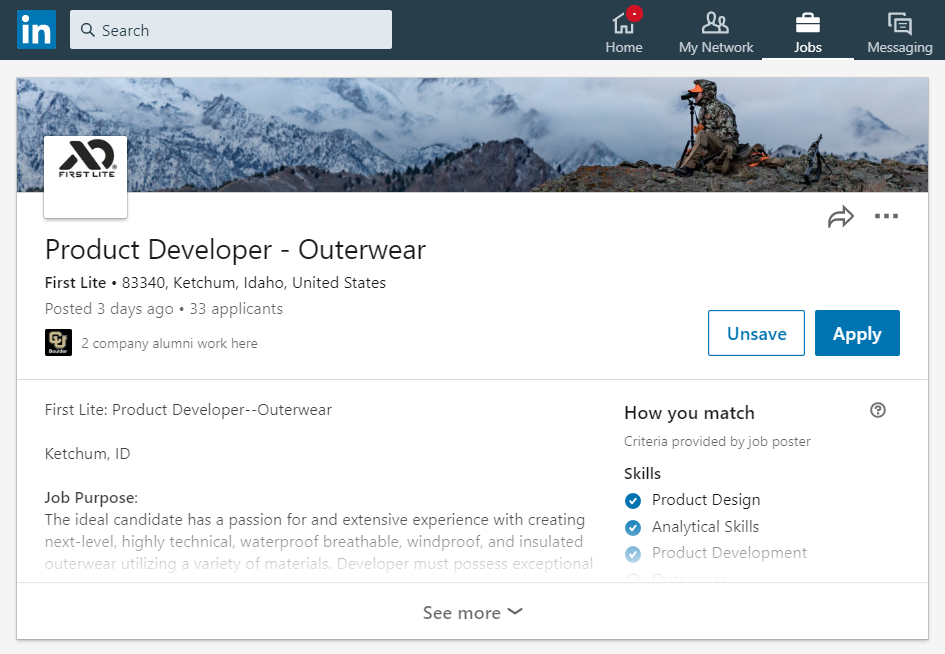
2. Copy said job description and paste it into a word bubble generator such as Wordle [A software that counts the mention frequency of words in body of text].

3. Repeat Step 2 for your own Resume.
4. Compare the outputted wordles from the job posting and your Resume. Are the largest words appearing to be the same? If not.. go back and tweak your resume until you are happy with the outcome.
If you are on Linkedin (which you should likely be) also try doing this with your headline and about section. Take 5-10 dream job descriptions, put them into a word cloud, and tailor your descriptors to compliment your findings and to boost your search appearances.
3. The Cover Letter
A great supplement to any application, the cover letter should not be a repetition of your resume. Of course, reference your past positions and any relevant certifications. But even more so convey what value you bring to the company. Show that you have done your research and are able to draw parallels between your skill sets and where the company is growing. Understandably, personalizing every cover letter that you are sending out can be a very time consuming task, but it might be the difference between getting a call or not.
Here are some great tips to help you get started on your journey.
4. Personal Website
If you have completed various projects whether they be academic, personal, or professional compiling them all in a shareable platform can be an effective tool in developing your applications. Not only does it work as a starting talking point, but it simultaneously works to train yourself in concisely describing your past work and recognizing points of growth and accomplishments throughout the past years. If you are early on in your career, it is best to start now as it will save you time in the future, and gives you a safe location to store documentation and photos of your progress along the way.
5. Find Your Passion
Nothing comes off more clearly than passion. You can teach technical skills but you can not teach someone to lead with passion. Use this to your advantage in your cover letters and forms of communication. Students, if you can use your projects or assignments to explore a certain topic that relates to an industry you are interested in pursuing. It not only kills two birds with one stone, but will serve you great use in increasing your talking points and opening up avenues to connect over.
Explore taking up personal side projects: starting a blog, creative endeavors, interviewing professionals for an expose. Whatever it takes to grow your portfolio while documenting it.


Comments